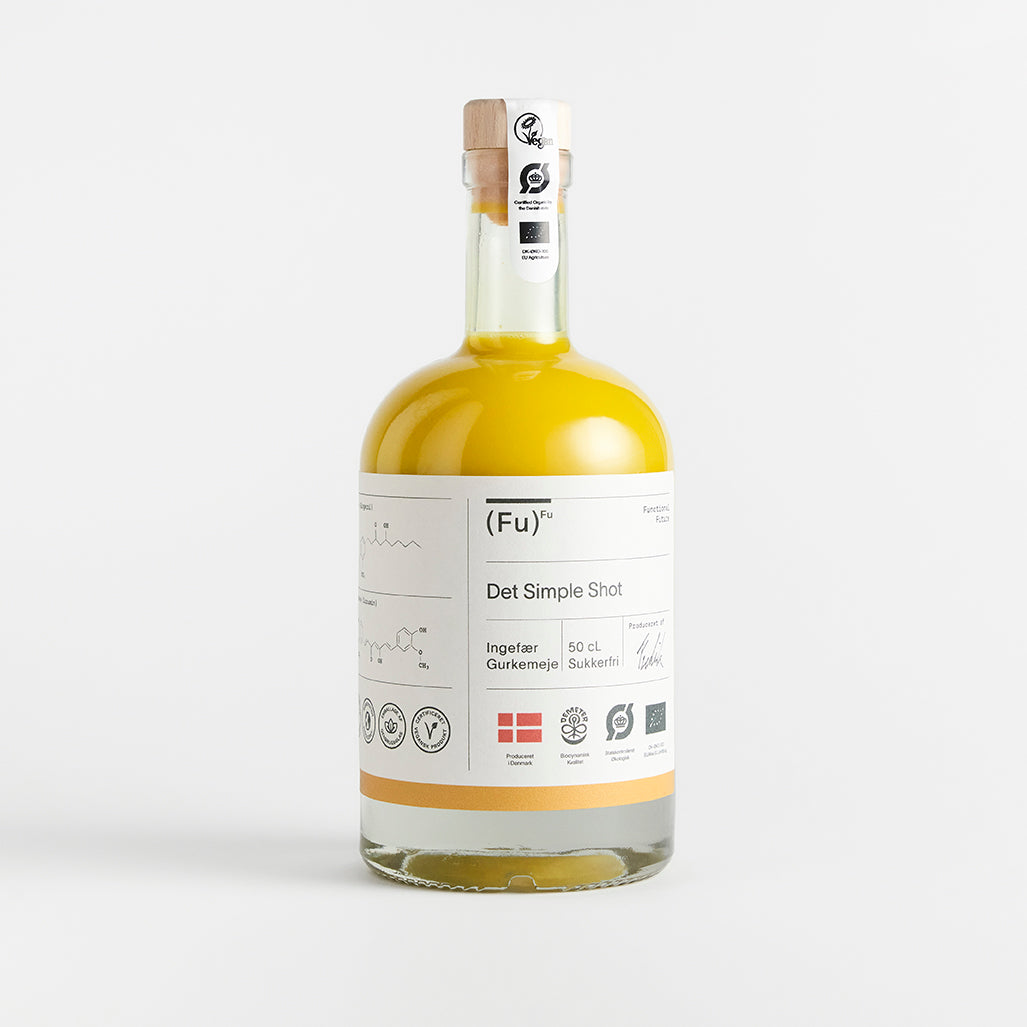

Collagen guide: the difference between type I, II, and III
Collagen has become a part of everyday life for many, but when discussing types I, II, and III, confusion often arises. Are there real differences, and does it practically matter whether one chooses a product with one type over another?
Yes. It makes a difference, both in the body and in product selection.
The short answer: types I and III are most common in skin, tendons, and bones, while type II is central to joint cartilage. The slightly longer answer is provided here, soberly and without fuss, so you can choose what suits your daily life and your goals.
What is collagen, and why are there several types?
Collagen is a structural protein that acts as the body's natural reinforcing mesh. It primarily consists of the amino acids glycine, proline, and hydroxyproline. There are at least 28 types in the body, but in everyday diets and supplements, types I, II, and III are most commonly discussed.
- Type I: strong and tensile. Dominates in skin, tendons, and bones.
- Type II: more elastic. Dominates in joint cartilage and the vitreous humor of the eye.
- Type III: flexible and fine-meshed. Found in blood vessels, intestines, and together with type I in the skin.
Although the amino acids are similar, the architecture is different. Differences in cross-linking and fiber structure give the types their special properties.
When collagen is hydrolyzed into peptides, the protein is cut into smaller pieces that the body can more easily absorb. This does not mean that type differences completely disappear, but the benefits can overlap because the body uses the amino acids where they are needed.
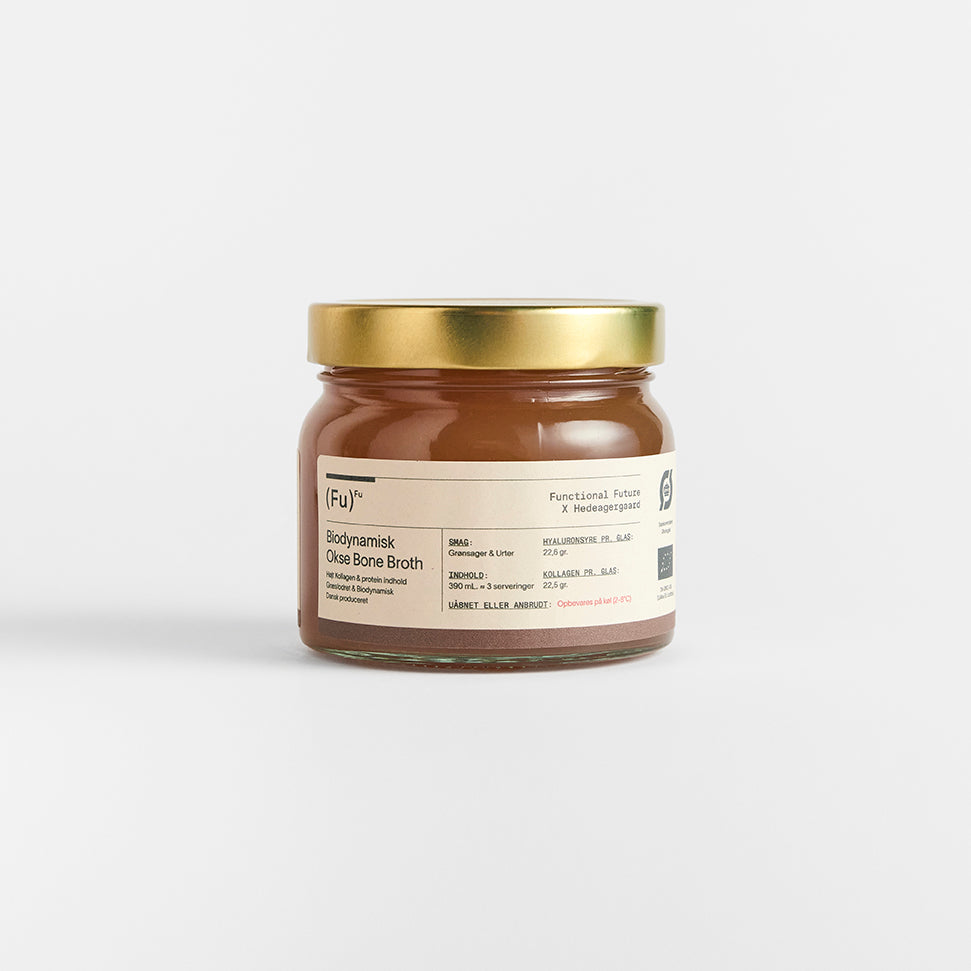
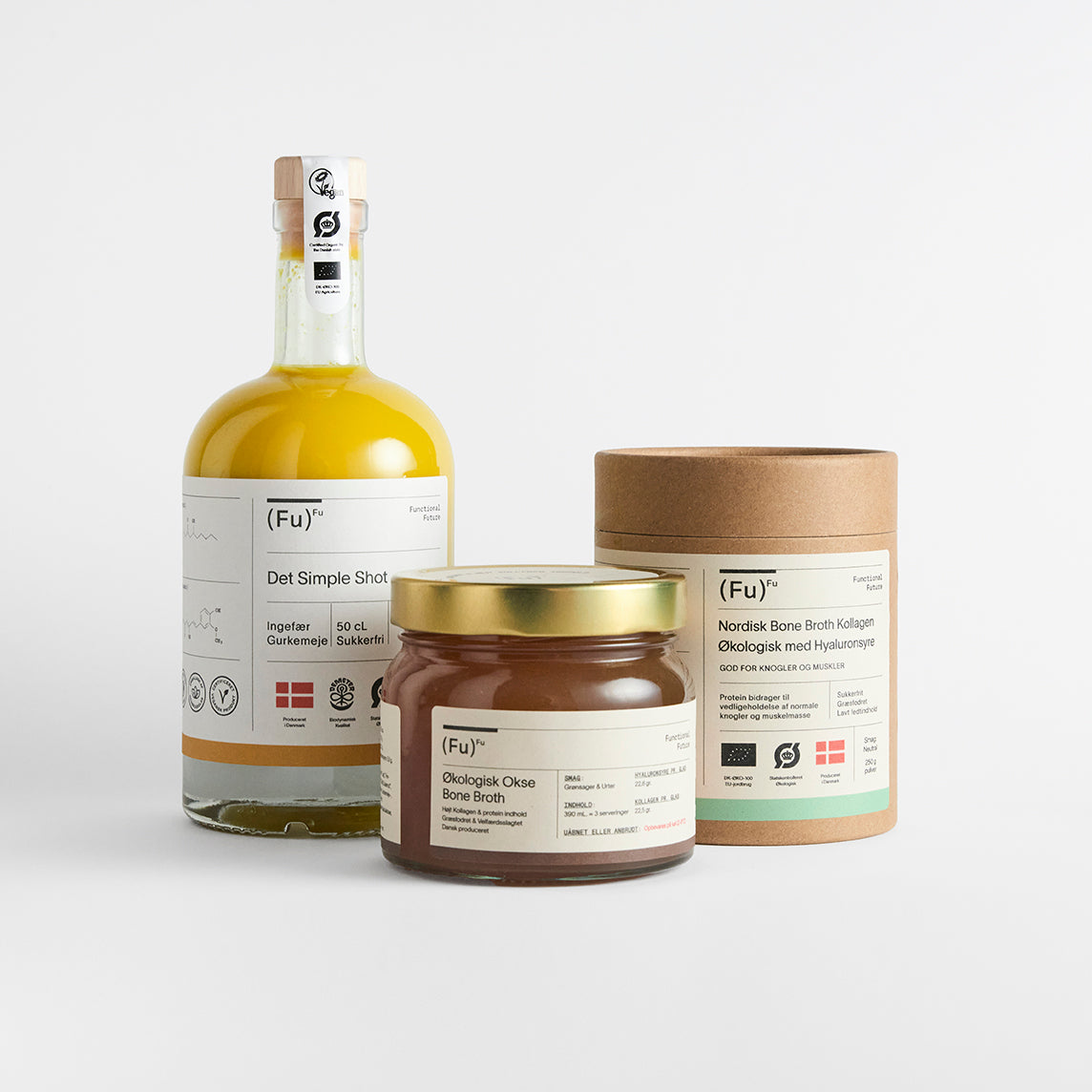
Our Bone Broth is also a popular choice for getting all types of collagen, which can be easily drunk in the morning or added to cooking for extra flavor.

Type I: skin, tendons, and bones
Type I is the most abundant collagen in the body. It provides strength to tissues that need to withstand tension and stress.
Typical sources
Beef and fish. Bovine collagen peptide is typically a combination of type I and III. Marine collagen is often very high in type I.
Bone broth from beef or fish naturally contains type I from bones and connective tissue.
What is observed in practice?
Skin and hair: many experience improved elasticity and moisture after 8 to 12 weeks with 5 to 10 grams of collagen peptides daily.
Bones: type I is part of the organic matrix of bones. Along with sufficient calcium, K2, and vitamin D, collagen can be a component in a strong skeleton.
Exercise: tendons and ligaments are subjected to tension. Collagen and vitamin C before or after exercise are often used in recovery routines.

Type II: Articular Cartilage and Comfortable Movement
Type II dominates in joint cartilage, which is smooth and compressible. Here, the focus is on wear resistance, shock absorption, and flexibility.
Two important forms in supplements
Hydrolyzed type II: primarily works by providing amino acids for building.
Undenatured type II (UC-II): small amounts, typically 40 mg, but works differently via immune tolerance in the gut. It can affect how the body reacts to cartilage components.
What is observed in practice?
Freedom of movement and comfort in everyday life.
Interaction with type I and III: many combine forms, as joints also contain tendons, capsules, and ligaments with type I.
Dietary sources
Chicken cartilage and sternum.
Long-simmered broth, especially from cartilaginous parts.

Type III: Blood Vessels, Intestines, and Skin Structure
Type III often appears together with type I and provides elasticity in tissues that need to be able to expand and contract.
Typical sources
Bovine collagen often contains type I and III.
Bone broth made from whole bones and connective tissue contains both types.
What is seen in practice?
Support for skin structure together with type I.
Tissues in the intestines and blood vessels, where flexibility is important.
Myths and realities
Collagen is not a complete protein - true.
It is low in tryptophan. See it as a supplement to your total protein intake, not a replacement for fish, eggs, beans, and meat.
Collagen only works if it's from fish - false.
Bovine and marine collagen have similar amino acid compositions. The choice may come down to tolerances, taste, and sustainability.
Collagen is destroyed by heat - not in practical cooking.
The peptides can withstand the heat they encounter in coffee, tea, and soup.
Sustainability and local choices
Collagen makes sense in a circular economy, as it utilizes the whole animal. Bones, tendons, and skin become nutrients that often end up as waste. When raw materials come from organic or biodynamic farms with regenerative practices, it supports soil fertility, animal welfare, and cleaner aquatic environments.
Local production cuts down on unnecessary mileage, and transparent testing builds trust. These are the lenses we use at Functional Future every time we develop or improve a product.
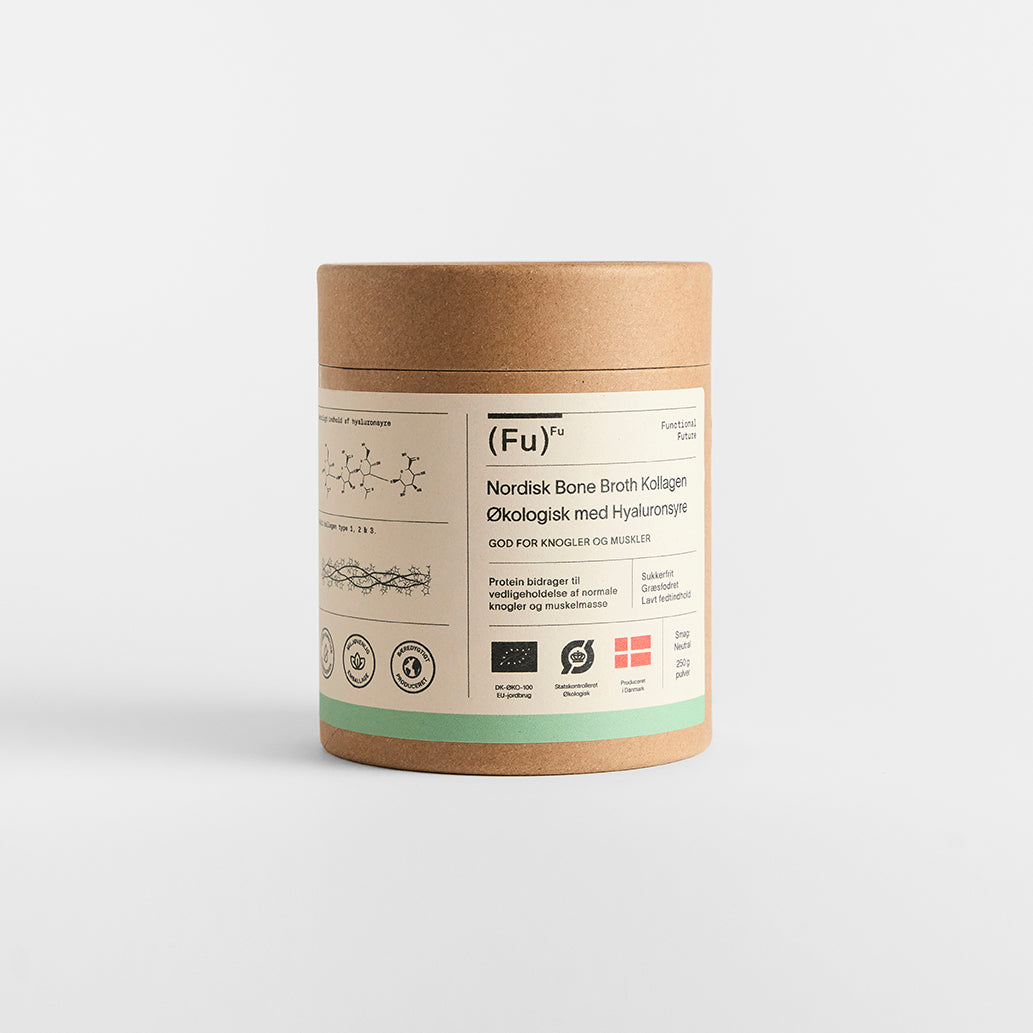
Collagen powder
See the most frequently asked questions we receive about our collagen powder
If you don't like the way it clumps, we definitely recommend our collagen capsules. We produce all our products without preservatives / e-numbers, and therefore, unfortunately, our collagen powder naturally clumps due to the hyaluronic acid.
Our collagen powder is a dry product and lasts for approximately 1.5 years from the production date, and 6 months from opening.
We recommend 10 grams of collagen powder daily, divided into two servings to allow the body to absorb it optimally.
Our Bone Broth Collagen naturally contains several types of collagen – primarily Type I: approx. 70%, Type II: approx. 5%, Type III: approx. 2%, and smaller amounts of Type IV and V. As the product is made from whole joints (bones, cartilage, and connective tissue), this distribution is naturally occurring, not artificially added, and therefore provides a very broad spectrum of collagen types that the body recognizes.
As a general rule, you don't need to take other products to get the most out of our collagen. We do, of course, state that our supplements should not replace a healthy and varied diet. We have designed our products so that everything can be taken individually, and no product replaces another.

Buy from cart
Christina W.
Remarkable. This collagen is the finest quality I have ever tried.
Mads C.
Highly recommended. Perfect start to the morning.
Kamilla H.
I'm super happy with this product! Great for hot drinks. As it's super easy and has a neutral taste.
Read more in the journal
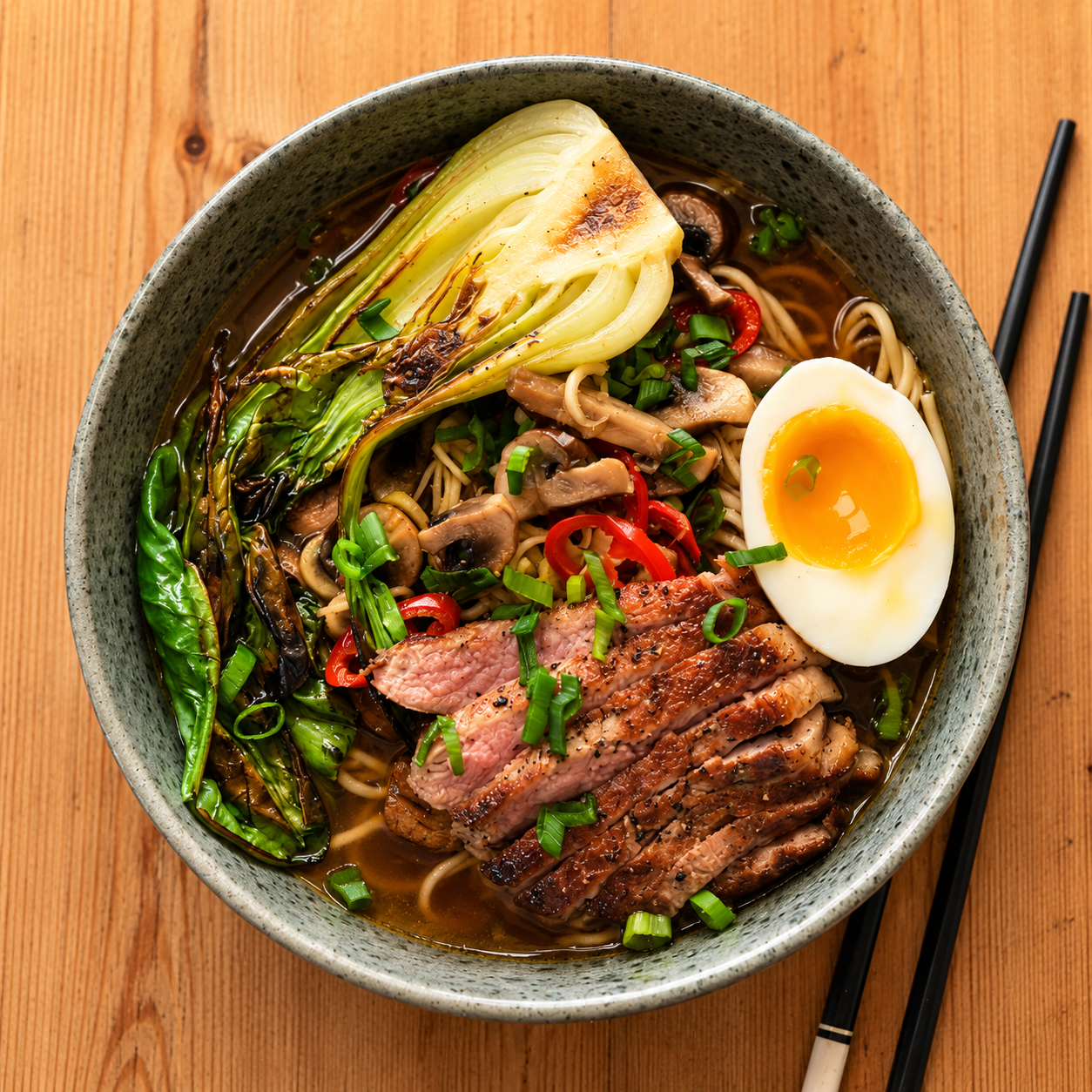
En dyb, varm ramen lavet på Bone Broth som base. Med grillet pak choi, oksekød og shiitake.
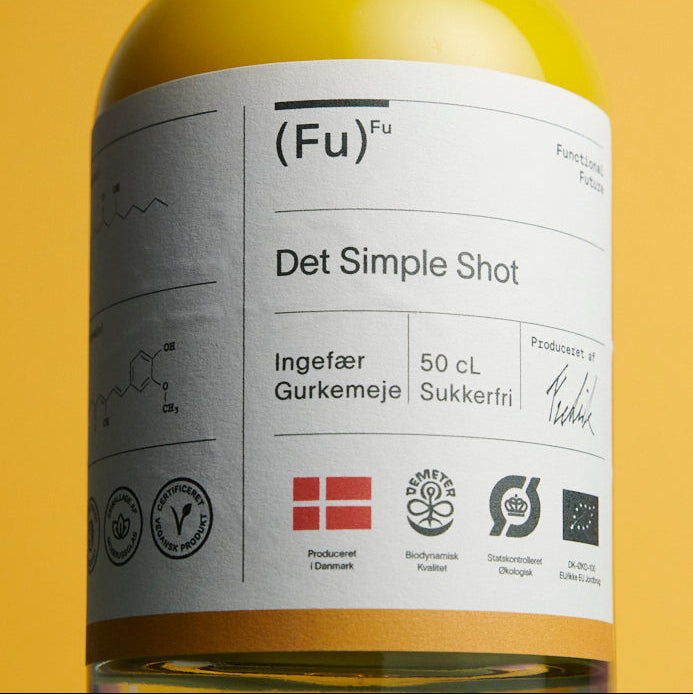
Ginger is not new. It has been used for millennia: as food, as medicine, and as an everyday ritual. What's new is that we now know more precisely what actually happens in the body when you consume ...

Lea Sørensen has always had her children with her in the kitchen. Not as a planned project, but because that's where she was. They've been on her arm, on the floor, on the kitc...